Victoria Peak Compass

Your independent guide to Hong Kong's most iconic peak

Explore the Guide

Hong Kong's Greatest Vantage Point

Rising 552 metres above Hong Kong Island, Victoria Peak is the city's crown jewel and its most celebrated viewpoint. This guide covers everything you need to plan your visit — from the legendary Peak Tram ascent to the garden trails, dining options, and the best times of day to capture that postcard shot.

Start Your Visit
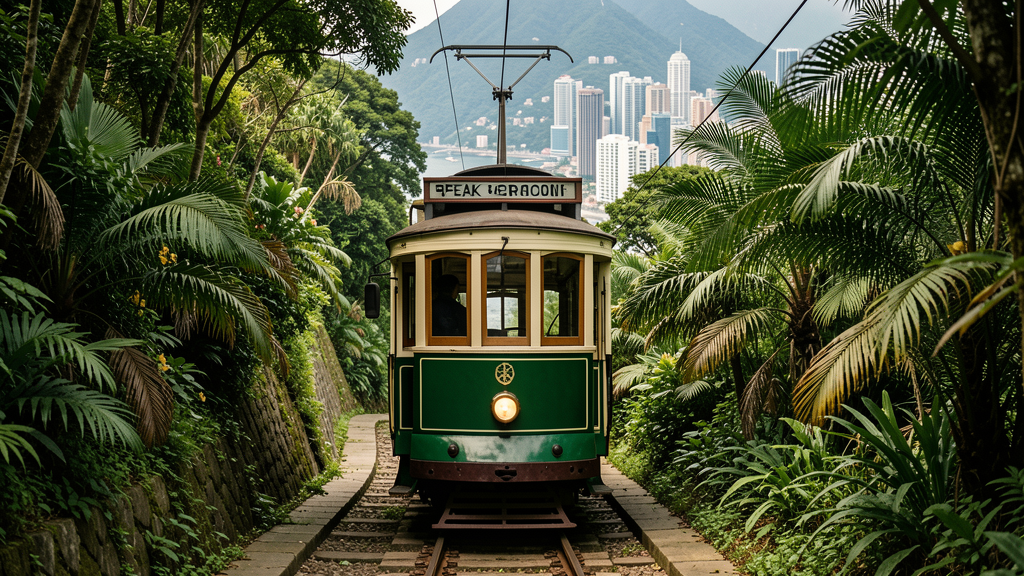
Historic Peak Tram ascending through lush tropical greenery

Essential Reading

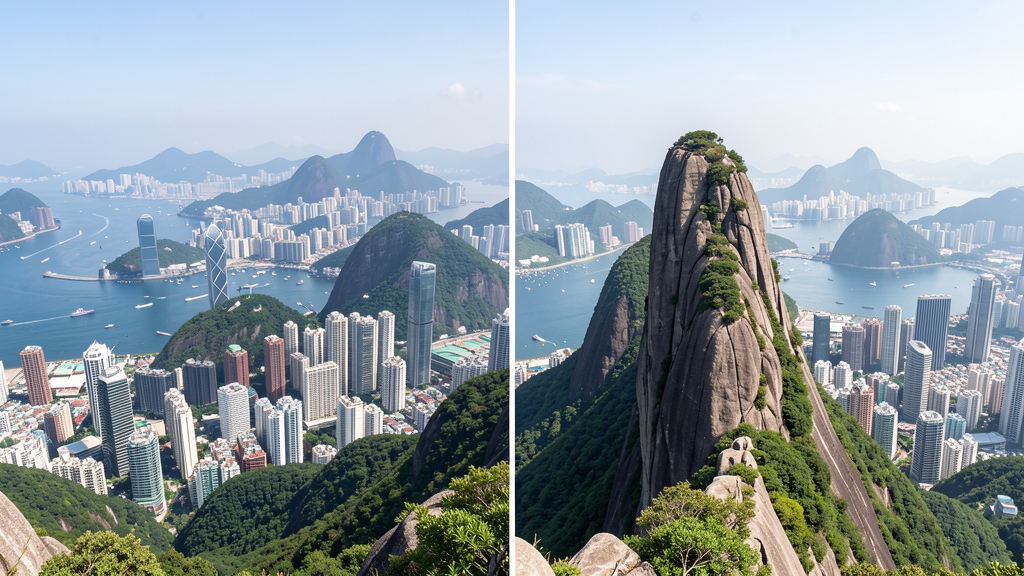
Victoria Peak historic tram and early 20th century Hong Kong skyline

Victoria Peak History & Heritage

Discover how Victoria Peak transformed from a restricted colonial retreat into the world's most famous urban viewpoint, and why the original Summit Hotel still shapes the Peak's identity today.

Rising 552 metres above sea level, Victoria Peak has been Hong Kong's defining landmark since the British colonial era began in 1841. In the early days, only senior government officials and wealthy merchants were permitted to build on the Peak — the slopes were considered too steep and exposed for ordinary residents, and the land was reserved for the elite.

The construction of the Peak Tram in 1888 changed everything. Suddenly, the Peak was accessible to anyone who could afford the short journey, and a village of villas, gardens, and small hotels began to grow around the summit. The original Summit Hotel, built in the 1890s, gave its name to the area still known today as the Peak.

During the 1920s and 1930s, the Peak became synonymous with colonial sophistication. The Peak Tower, originally built in 1940, housed observation galleries and cafés that attracted visitors from around the world. The views over Victoria Harbour and the Kowloon Peninsula were described in travel magazines as among the finest urban panoramas on earth.

After the Second World War, Hong Kong's explosive growth transformed the Peak's outlook entirely. Skyscrapers that would have seemed unimaginable in the colonial era now frame the view from every platform. The historic Peak Tram cars were replaced in 1989 with modern panoramic versions, but the original green-and-cream livery was kept as a deliberate nod to the heritage of the route.

Today, Victoria Peak welcomes over 7 million visitors per year. Its history — as a place reserved for privilege, then opened to all, and now a symbol of a city's global ambitions — is written into every view from its platforms.
Green Peak Tram vehicle on steep tracks through Hong Kong hillside

The Peak Tram — Your Complete Guide

Everything you need to know before you ride: schedules, ticket types, the science of the funicular incline, and how to avoid the queues at the Lower Terminus.

The Peak Tram is not merely transport — it is the experience that makes Victoria Peak accessible to everyone. Opened in 1888, the funicular railway climbs the steep southern face of Victoria Peak at a consistent gradient of 27 degrees, the steepest funicular incline in Asia.

Operating hours: The tram runs from 10 AM to 11 PM on weekdays and from 8 AM to 11 PM on weekends and Hong Kong public holidays. During Chinese New Year and major holiday weekends, hours may extend to midnight. The frequency is every 10–15 minutes during peak periods.

Ticketing: There are two classes — Standard Class and the premium Observatory Deck upgrade bundled with Peak Tower entry. One-way tickets can be purchased at the Lower Terminus or online. Return tickets are only available in combination packages at the Upper Terminus. The queue at the Lower Terminus on weekends can exceed 45 minutes; booking online in advance is strongly recommended.

The tram cars themselves are worth the ride — the modern panoramic cars (introduced in 1989) have large windows on both sides and at the front, giving unobstructed views of the hillside as you ascend. Photography from inside the tram is challenging due to the speed and the angle of the light, but the views on a clear morning are extraordinary.

Getting there from central Hong Kong: The Lower Terminus is a short walk from the St. John's Cathedral on Garden Road. The nearest MTR station is Central (Exit J2), followed by a 7-minute walk up Garden Road past the former Legislative Council building.

Panoramic view platform at Victoria Peak with Hong Kong skyline

Best Photo Spots on Victoria Peak

From the classic Peak Galleria shot to the lesser-known Arrow Street look-out, this guide covers every worthwhile framing point for your Hong Kong skyline photographs.

Victoria Peak is, first and foremost, a photography destination. The 360-degree views over Hong Kong's harbour and skyline have been captured millions of times, but with the right timing and positioning, you can still come away with an original image.

The Peak Galleria viewing deck (east face): The eastern-facing deck gives you the classic postcard shot — Victoria Harbour in the middle distance, the Wan Chai and Causeway Bay districts to the right, and the forested hills of Hong Kong Island to the left. This is the shot you see on every postcard, which means it is also the most photographed angle. Arrive before 9 AM to photograph it in soft morning light with minimal crowds.

The Peak Tower Sky Terrace (level 5): The open-air Sky Terrace offers unobstructed views in all directions from 428 metres elevation. It costs extra to enter, but the extra height above the tree line makes a noticeable difference to the clarity of your skyline shots. The west-facing corner is best for sunset and blue-hour photography.

The Arrow Street look-out: A short walk west from the Peak Tower along Hatton Road brings you to a small stone platform with an open view over the western harbour. This spot is rarely crowded and gives a completely different perspective from the main platforms — you look directly at the Tsing Yi and Kwai Tsing container terminals, framed by the green hills of the New Territories.

Golden hour timing: In summer, the sun sets over the western New Territories, throwing the city skyline into warm side-light. In winter, it sets more to the south, which aligns with views towards Kowloon. Check the weather forecast for your visit date and plan to be on the east-facing deck about 30 minutes before sunset.

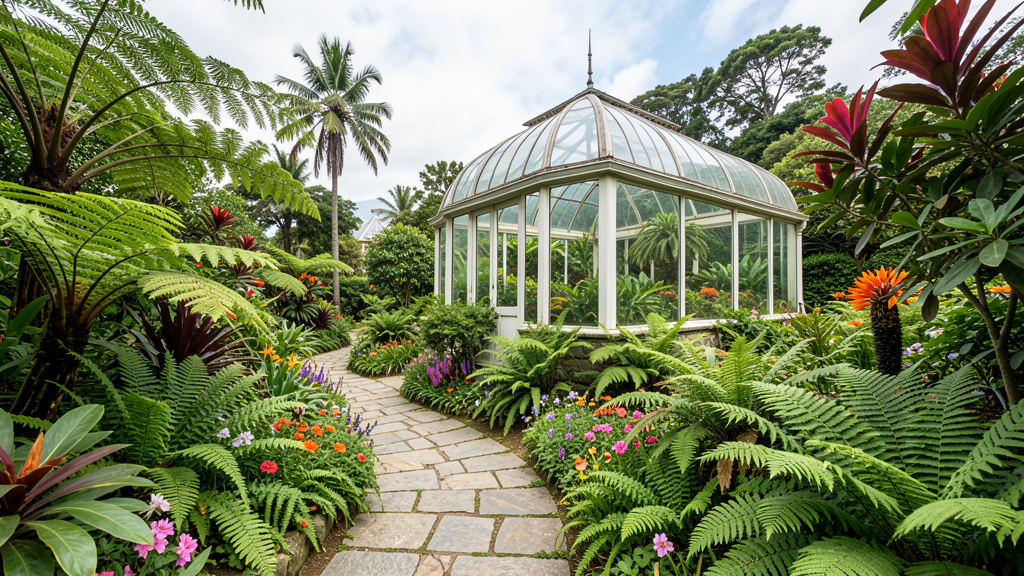
Victoria Peak Garden lush tropical garden with heritage greenhouse

Victoria Peak Garden — A Hidden Oasis

Most visitors rush straight to the viewpoints and miss the 20-hectare garden tucked behind the Peak Tower. Here is why you should slow down and spend an hour here.

Victoria Peak Garden is a 20-hectare public park that sits behind the Peak Tower complex, separated from the commercial viewing areas by a screen of trees. Most visitors who come only to see the skyline miss it entirely — which is precisely why it remains one of Hong Kong's most peaceful green spaces.

The garden was established in 1913 as part of the Peak Reservation Scheme, which set aside the upper slopes of Victoria Peak as a protected green zone. The original layout was designed by a British horticultural architect who incorporated the natural contours of the hillside into a series of terraced garden beds, winding paths, and specimen trees.

Today, the garden features more than 1,000 trees and shrubs, including several heritage banyan trees that were already mature when the garden opened. The Lily Pond near the main entrance is a favourite spot for quiet photography, and the greenhouse near the southwestern corner houses a rotating display of tropical flowering plants.

The full loop walk around the garden perimeter takes about 40 minutes at a comfortable pace. There are benches throughout, making it suitable for older visitors or families with young children who need regular rest stops. The path is flat and fully surfaced — it is one of the few level walks on Hong Kong Island above 400 metres elevation.

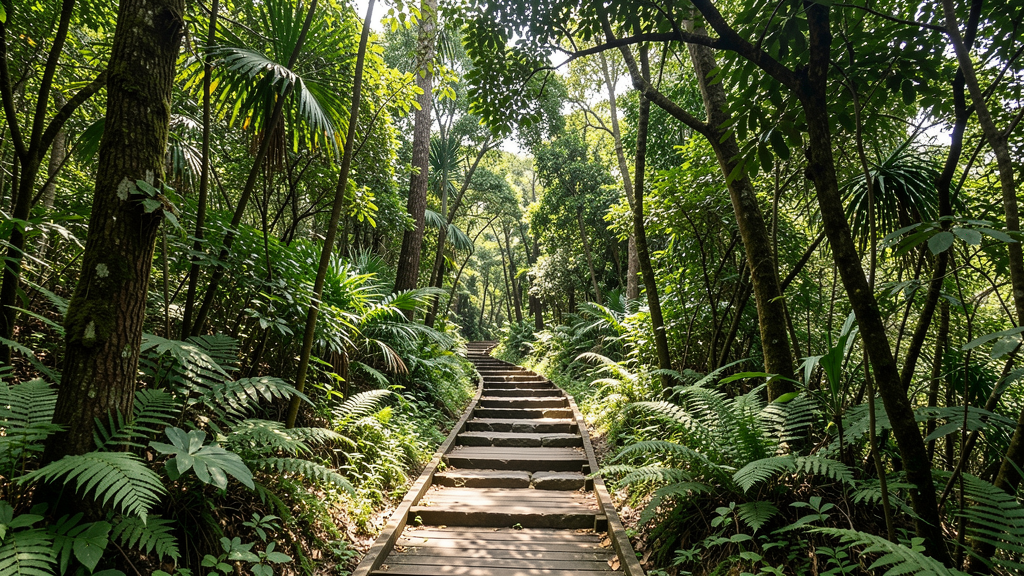
Winding hiking trail through tropical forest on Victoria Peak hillside

Walking Trails & Hiking Routes

The Peak Circle Walk and the extended route to the summit of Victoria Peak via the Pokfulam Reservoir offer two very different experiences — one is a gentle urban circuit, the other a real hike.

Victoria Peak is the starting point for some of Hong Kong Island's most rewarding walking routes. The trails range from a fully accessible urban circuit to a challenging hike that takes you from the Peak down to the Pokfulam Reservoir and back up again.

The Peak Circle Walk: This 3.5-kilometre loop starts and ends at the Peak Tower. It follows a sealed path that loops around the western and southern slopes of the Peak, passing through secondary forest and open hillside. The path is well-maintained but has some steep short sections. Allow one hour for a complete circuit. The views are partial — the path winds between residential buildings — but the forest sections are genuinely pleasant.

The Peak to Pokfulam extended route: This 6-kilometre linear trail starts at the Peak Tower and descends via the Pokfulam Reservoir to the University of Hong Kong. It follows a mix of concrete paths and stone steps through mature woodland. The reward is the reservoir itself — a large artificial lake surrounded by forest that feels a world away from the city. The trail ends at the bus terminus at Pokfulam Road, from which you can take bus 4 or 7 back to Central.

Victoria Peak summit (direct route): The highest accessible point on Victoria Peak is the summit area beyond the Peak Tower, reached via the un named footpath that climbs past the former Peak Tram engine house. This is a steep, unmarked path that requires reasonable fitness. The view from the summit is only marginally higher than the Peak Tower, and the path can be slippery after rain.

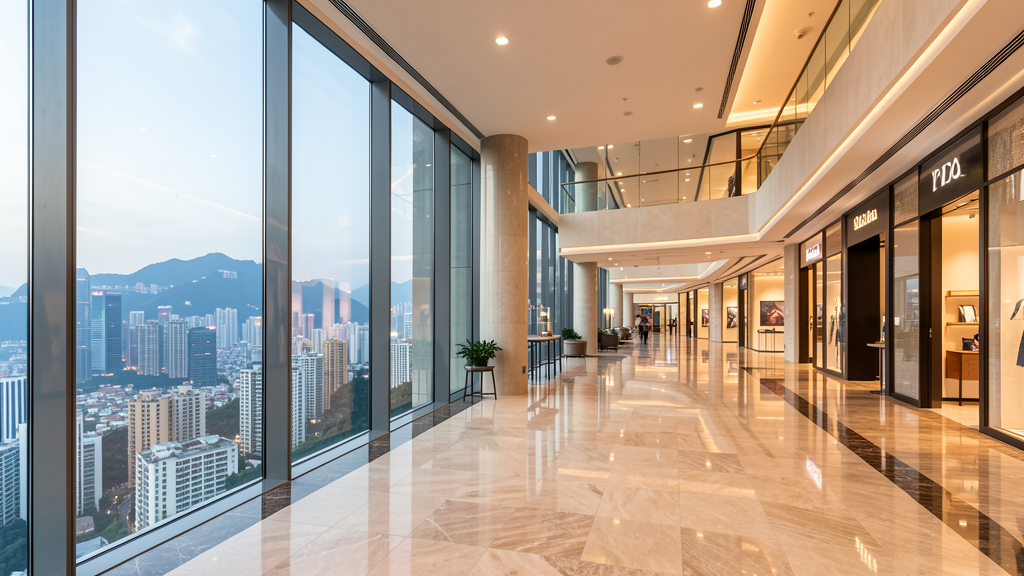
Modern shopping mall interior at Victoria Peak with city view

The Peak Tower — Shopping & Dining

Beyond the viewing decks, the Peak Tower houses a carefully curated selection of restaurants and retail spaces. Here is what to eat and where to eat it.

The current Peak Tower building was opened in 1997, replacing the original 1940s structure. Designed by architectural firm C.Y. Choi and Associates, its distinctive angular profile — often compared to a traditional Chinese knot — has become as recognisable a Hong Kong symbol as the skyline itself.

Dining: The Peak Tower has four dining floors. Level 2 is dominated by quick-service options — a Starbucks, a noodle bar, and a confectionery shop. Level 3 is where most visitors end up eating — it hosts mid-range restaurants with harbour views, including a dim sum restaurant and a Western steakhouse. The fine dining option is on Level 4 — a Chinese restaurant with panoramic views and a premium menu.

For the best value, venture to the Peak Galleria next door, which has a food court on its third floor serving a range of Asian cuisines at prices significantly lower than the Peak Tower options. The Peak Galleria also has a supermarket and a pharmacy, making it useful for visitors staying in the area.

Retail: The Peak Tower's retail spaces are focused on souvenir shopping, with several stores selling Hong Kong-themed gifts, local designer jewellery, and artisan crafts. Prices are higher than in Central or Causeway Bay, but the range of genuinely local products is better than most tourist-area shops.

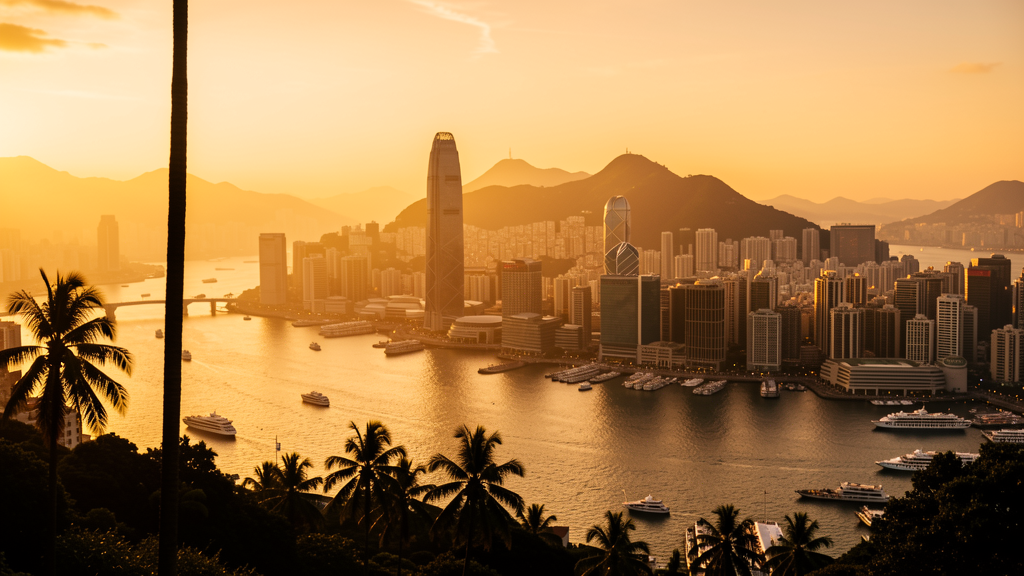
Golden hour sunset over Hong Kong skyline from Victoria Peak viewpoint

Best Time to Visit Victoria Peak

Weekday mornings are quietest, golden hour gives the best photos, and Friday evenings are spectacular but crowded. Here is how to time your visit for maximum enjoyment.

The question of when to visit Victoria Peak is one of the most practical decisions you will make for your Hong Kong trip, and the answer depends on what you want from the experience.

Best for quiet exploration — weekday mornings: If your priority is to experience the Peak without crowds and to walk the garden and trails at leisure, a weekday visit between 8 AM and 10 AM is ideal. The Peak Tram has the lightest passenger load of the day, the viewing platforms are nearly empty, and the morning light over the harbour is consistently good.

Best for photography — golden hour: The hour before sunset is when the city begins to light up while the sky still holds colour. On a clear evening, this transition is one of Asia's most spectacular urban views. The trade-off is that you will be sharing the platform with dozens of other photographers, all trying to capture the same moment. Arrive 45 minutes before sunset to secure a position.

Worst times: Friday and Saturday evenings between 6 PM and 9 PM are peak visitor periods. The platforms become extremely crowded, and the queue for the Peak Tram return can exceed one hour. Sunday afternoons are also busy, though the crowd dissipates by 4 PM as day-trippers return to Kowloon.

Seasonal considerations: Autumn (September to November) offers the clearest skies and most comfortable temperatures. Summer can be hazy, with visibility reduced by humidity and occasional smog. Winter brings the clearest air but also the coldest temperatures at the summit — expect around 12°C on a January evening.

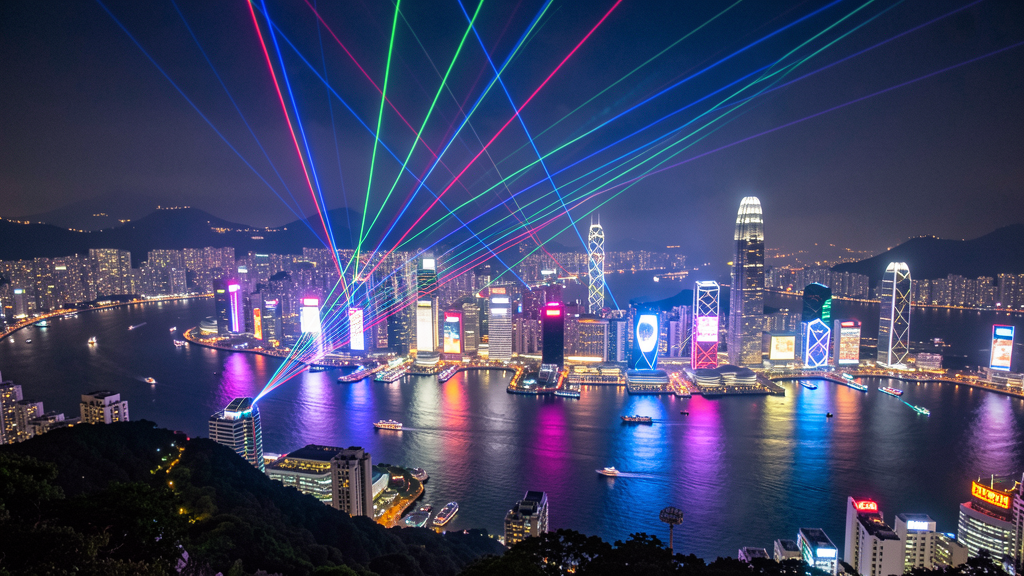
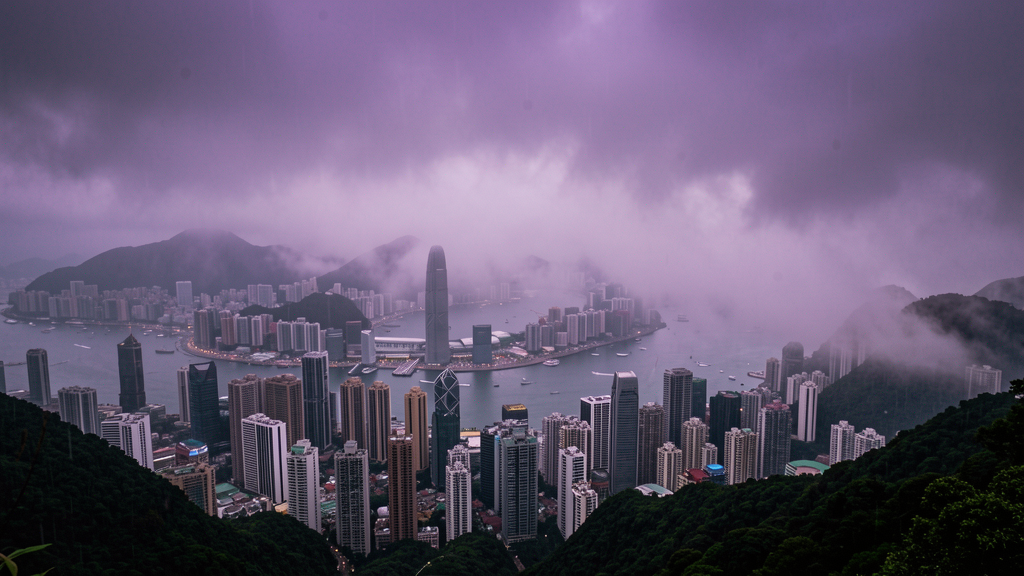
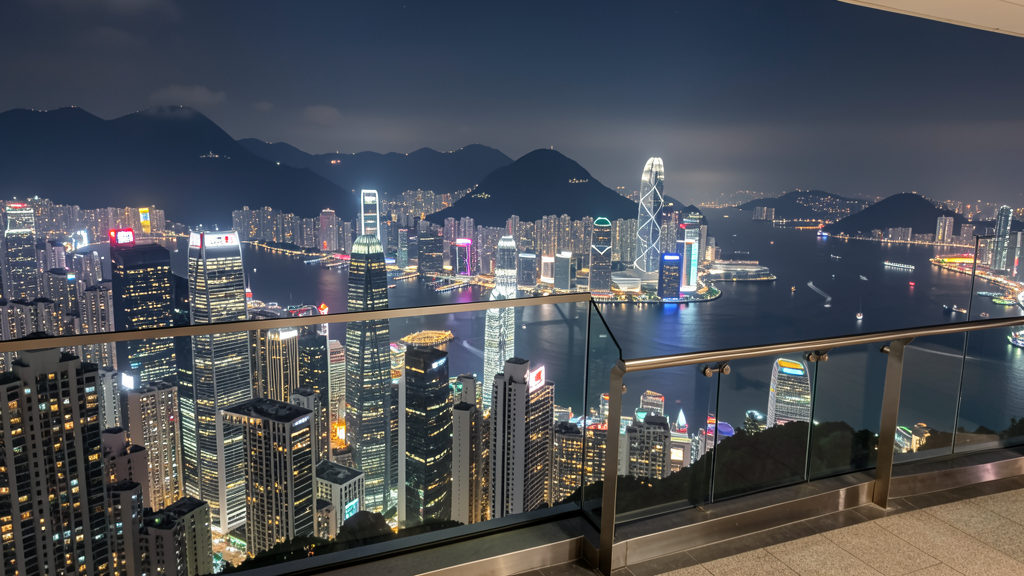
Hong Kong night skyline from Victoria Peak with illuminated buildings and harbour

Victoria Peak at Night — Symphony of Lights

The nightly Symphony of Lights show transforms Victoria Harbour into a synchronised display of laser beams and searchlights. From the Peak, you see the show from above — a completely different perspective.

The nightly Symphony of Lights show in Victoria Harbour is one of Hong Kong's most consistently performed free entertainment experiences, running every night at 8 PM. The show involves 40 major buildings on both sides of the harbour, each contributing a combination of searchlights, lasers, and LED facade animations that are choreographed to a soundtrack played from the Avenue of Stars in Tsim Sha Tsui.

From Victoria Peak's Sky Terrace, you watch the show from above — which means you see the beams arcing across the harbour from a perspective unavailable at ground level. The effect is geometric and abstract: laser lines criss-crossing the dark water while the building facades pulse in sequence.

The Peak Tower stays open until 11 PM, making it possible to watch the 8 PM show and still have time to explore the observation decks in the blue hour that follows. Restaurants on levels 3 and 4 also time their service to coincide with the show — ask for a window table when you book.

The show is cancelled during typhoon signal warnings or severe thunderstorm warnings, which are hoisted by the Hong Kong Observatory between May and November. Check the Observatory's website on the day of your visit if weather is uncertain.

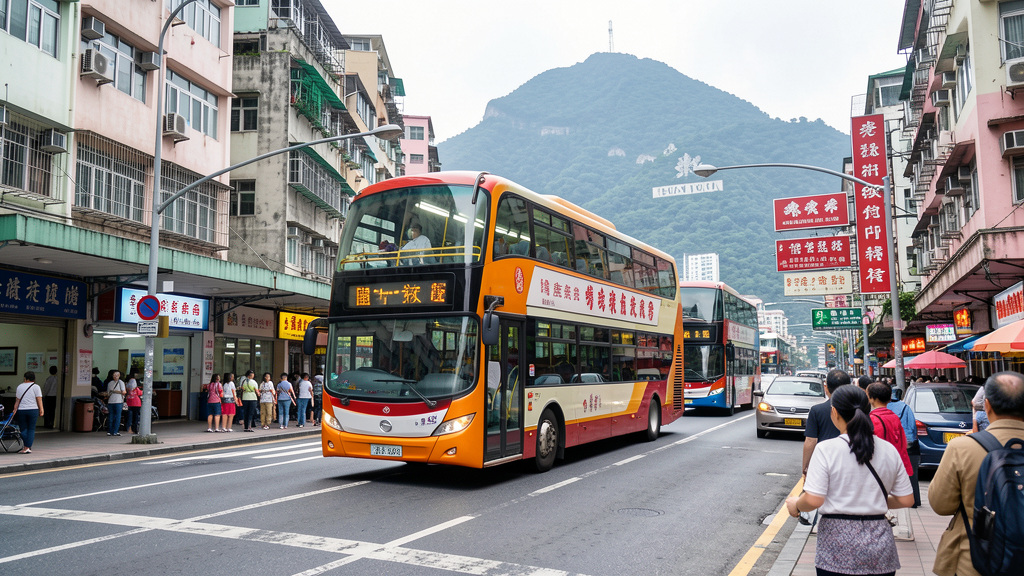
Double-decker Hong Kong bus at Victoria Peak bus terminus

How to Get to Victoria Peak

The Peak Tram is iconic but not the only way to reach the summit. Bus 15 from Central, a taxi, or the long-way round via Pokfulam Road — here are all your options ranked.

Reaching Victoria Peak is part of the experience, and there are more options than most visitors realise. Each approach offers a different perspective on the Peak and the surrounding city.

Peak Tram (recommended): The funicular railway from Garden Road in Central is the fastest and most scenic option. The journey takes 8 minutes and climbs 397 metres in that time — the steep incline is part of what makes it memorable. Tickets can be bought at the Lower Terminus or online. One-way: approximately HKD 45–60 depending on class.

Bus 15 from Central: The double-decker bus route 15 runs from Exchange Square in Central to the Peak Bus Terminus. Journey time is approximately 30–40 minutes depending on traffic. The upper deck gives good views of the hillside on the way up. Fares are significantly cheaper than the tram at around HKD 12–15. This is the best option for budget travellers or those who cannot queue for the tram.

Taxi: A taxi from Central to the Peak takes about 20 minutes and costs approximately HKD 50–70. The road to the Peak is winding and steep — the drivers know every turn. Taxi stands are located outside the Peak Tower and the Peak Galleria.

Walking from Pokfulam: The most adventurous option is to hike up from the Pokfulam Reservoir area, following the botanical trails that connect to the Peak Circle Walk. This takes 2–3 hours and requires a reasonable fitness level, but it rewards you with forest views unavailable from any vehicle.

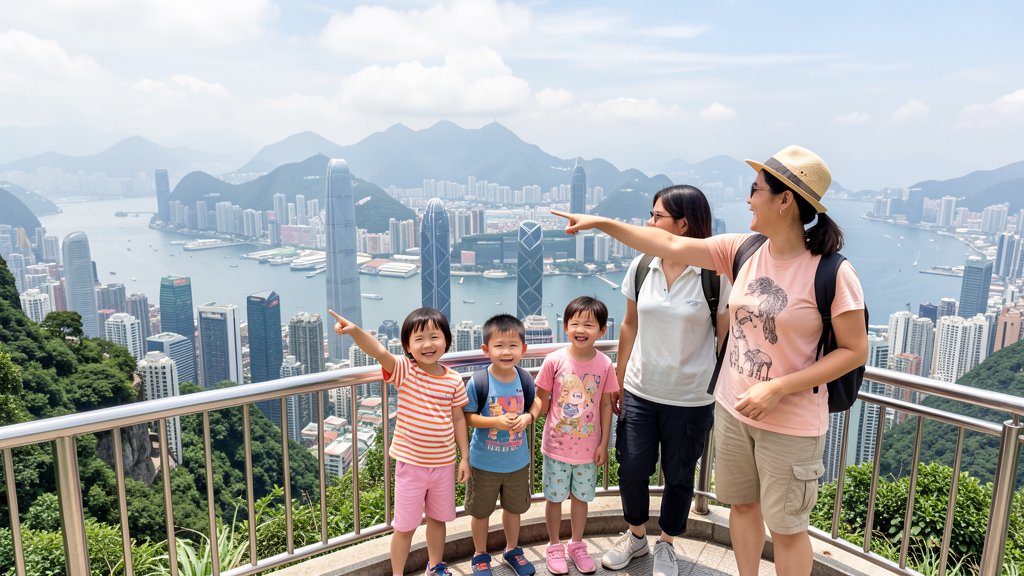
Family with children on Victoria Peak viewing platform Hong Kong

Victoria Peak with Kids — Family Guide

From the Peak Tram's exciting incline to the flat garden paths and the engaging eco-trail, Victoria Peak is one of Hong Kong's most child-friendly outdoor destinations with the right planning.

Taking children to Victoria Peak requires some planning — the weather can change quickly, the platforms get crowded, and the steep incline of the Peak Tram can be unsettling for very young children. Here is how to make it work for families with children of all ages.

Before you go: Bring a light rain jacket regardless of the weather forecast — the Peak is frequently shrouded in mist even when the city below is clear. Comfortable shoes are essential. Pack water and a small snack. Sunscreen is necessary even on overcast days, as UV radiation at the Peak's elevation can be significant.

The Peak Tram: Children under 3 travel free. The steep incline is the main concern — the tram tilts at 27 degrees, which can be disorienting for toddlers. Most children over the age of 5 handle it without concern, and many find it exciting. Sitting on the left side of the tram as you ascend gives the best view.

The Garden: The Victoria Peak Garden is the best part of the visit for families with young children. The flat, paved paths are easy for strollers, there are plenty of benches, and the lily pond always attracts attention. Allow 30–45 minutes here. The greenhouse also has a small gift shop near its entrance.

The eco-trail: A short interpretative trail near the garden entrance teaches children about Hong Kong's native plant species through numbered stopping points. It takes about 20 minutes and includes some animal carvings that children enjoy finding. A leaflet is available at the trail entrance.

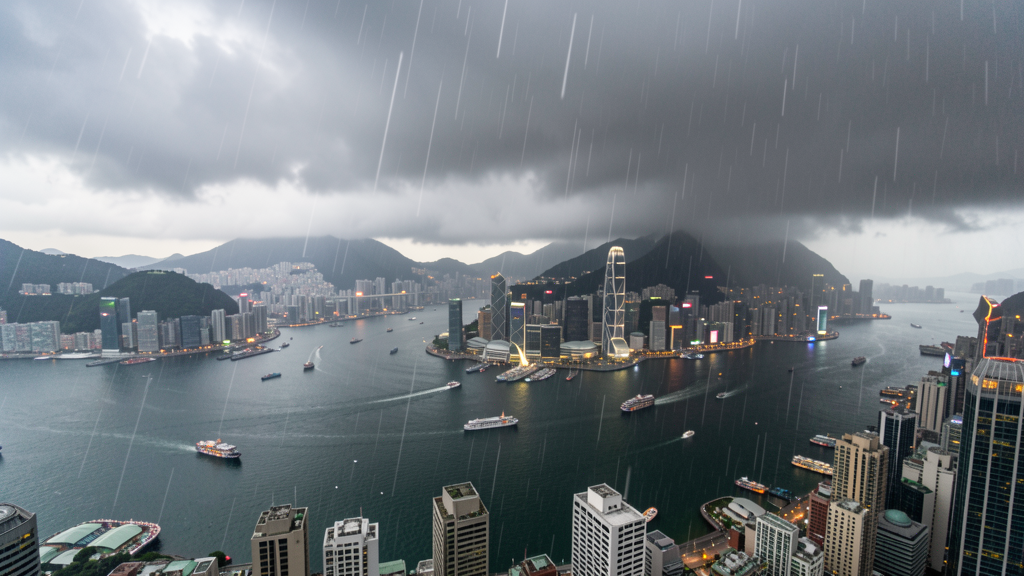
Dramatic moody Hong Kong skyline from Victoria Peak in rainy season mist

Rainy Season on Victoria Peak — What to Know

Hong Kong's wet season (May to September) brings frequent afternoon thunderstorms. Here is how to visit Victoria Peak safely during rainy season and still get great photographs.

Hong Kong's wet season runs from May to September and brings regular afternoon rain showers and thunderstorms. Visiting Victoria Peak during this period requires a different approach — but the results can be spectacular.

Understanding the weather: Morning visits during wet season are usually dry and often clear. The rain typically arrives in the afternoon, between 2 PM and 5 PM. If you visit in the morning, you are likely to encounter clear conditions — the morning light over the harbour is often better in wet season than in the drier winter months.

The mist factor: The Peak is frequently shrouded in low cloud and mist during wet season. This is not rain — it is the cloud layer sitting at the Peak's elevation. Visibility from the platforms can drop to near zero for 10–20 minutes, then clear suddenly. Check the Hong Kong Observatory's hourly visibility reports before you visit: the Peak is usually visible from sea level when the reported visibility at Waglan Island is above 10 kilometres.

Photography in wet weather: The platforms have covered areas near the Peak Tower and Peak Galleria where you can shelter while shooting. The harbour in wet season often has dramatic cloud formations above it, and the city lights after rain have a clarity that dry-season nights cannot match. Protect your camera from rain with a simple cover — a clear plastic bag with a hole for the lens works adequately in a pinch.

Typhoon Protocol: If the Hong Kong Observatory issues Typhoon Signal No. 3 or above, the Peak Tram suspends operation. During Signal No. 1, the tram runs but with reduced frequency. Check the Observatory website or the Peak Tram's official social media for real-time service updates before setting out.

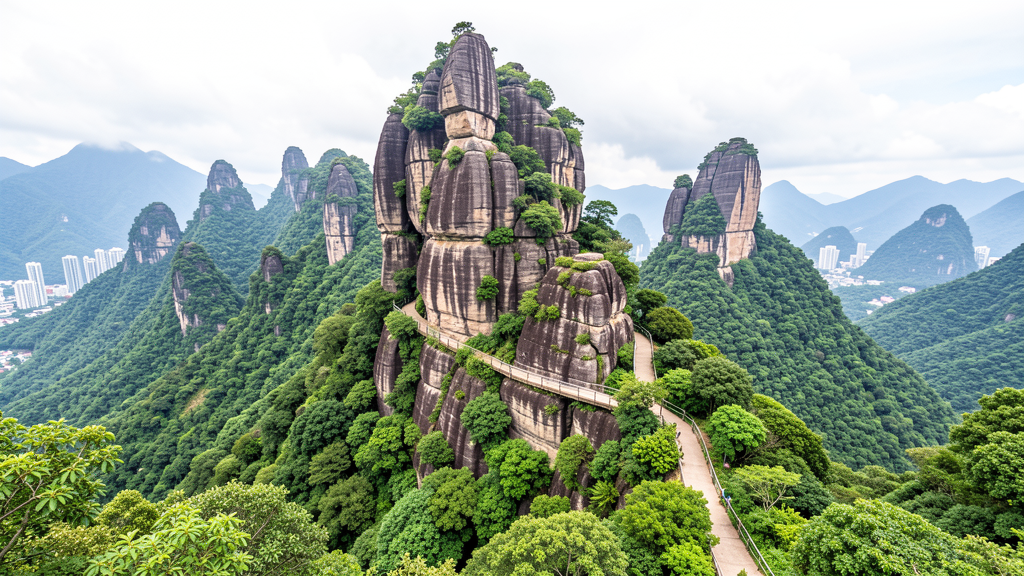
Lion Rock peak hiking trail with city views Hong Kong

Victoria Peak vs Other Hong Kong Viewpoints

Hong Kong has several iconic viewpoints, each offering a different perspective on the city. How does Victoria Peak compare to Lion Rock, The Peak East, and harbour-level alternatives?

Victoria Peak is Hong Kong's most famous viewpoint, but it is not the only one worth visiting. Understanding what each viewpoint offers helps you decide where to spend your limited sightseeing time.

Victoria Peak (552 m): The definitive Hong Kong experience. The Peak Tram journey is itself a major attraction, and the 360-degree views from the Summit are unmatched in their scope. The commercial infrastructure around the Peak — restaurants, shops, the garden — makes it a complete destination for half a day. The downside is crowds and the premium pricing of everything around the viewpoints.

Lion Rock (495 m): The mountain that gives its name to one of Hong Kong's most famous films is a challenging hike from Sha Tin on the New Territories side. The summit gives views over the eastern half of Hong Kong and the Tai Mo Shan range. It is free and has no crowds on weekday mornings. The hike takes 2–3 hours each way and requires reasonable fitness.

The Peak East (Mount Park): A lesser-known hill on the eastern ridge of Victoria Peak that offers clear views over the eastern harbour without the commercial infrastructure of the main Peak area. Reached via a 45-minute walk from the Peak Tram Upper Terminus along the Wilson Trail. Free and usually empty.

Harbour-level alternatives: The Avenue of Stars in Tsim Sha Tsui and the Central Ferry Piers both offer excellent harbour views at sea level. These are particularly valuable for photographers who want to shoot the skyline from the water, using the ferry crossing between Central and Tsim Sha Tsui as a mobile viewpoint. The harbour views are completely different from the Peak — closer, more detailed, and framed by the water.

Visitor Tips

Go Early or Late

Arrive before 9 AM or after 7 PM to avoid the crowds and capture the best photos with soft natural light.

Buy Tickets Online

Pre-book your Peak Tram return ticket online to skip the box office queue, especially during weekends and public holidays.

Bring a Light Jacket

Even in summer, the Peak can be 3–4°C cooler than sea level and frequently misty. A light windbreaker makes a big difference.

Walk the Garden Loop

The full loop around Victoria Peak Garden takes about 40 minutes and gives you quiet forest paths far from the viewpoints.

Seasonal Guide

Spring

March – May

  • Mild temperatures, 18–25°C, ideal for walking
  • Peak tram queues shorter on weekday mornings
  • Occasional spring showers — bring a compact umbrella
  • Best visibility for photography before the humidity rises

Summer

June – August

  • Hot and humid, 28–35°C — visit before 10 AM
  • Monsoon season: afternoon thunderstorms common
  • Best evening views after rain clears the air
  • Symphony of Lights visible even in light rain

Autumn

September – November

  • Most comfortable season: 20–28°C, lower humidity
  • Clearest skies and most consistent visibility
  • Best overall photography conditions
  • Peak tourist season — book tram tickets early

Winter

December – February

  • Cool and dry, 12–20°C — most comfortable hiking weather
  • Lowest humidity of the year: clearest views
  • Peak evening temperatures around 12°C — bring layers
  • Shortest queues of any season at the viewpoints

Frequently Asked Questions

Take the Peak Tram from the Lower Terminus at Garden Road in Central. The journey takes about 8 minutes and departs every 10–15 minutes. Alternatively, take bus 15 from Exchange Square or a taxi.

Weekday mornings before 10 AM offer the lightest crowds. For photography, aim for the golden hour just before sunset — the city lights begin to glow while there is still colour in the sky. Friday and Saturday evenings are busiest.

Yes — the viewing platforms are fully accessible and the Garden is flat and stroller-friendly. The Peak Tram itself can be intimidating for very young children due to the steep 27° incline. Allow 2–3 hours for a relaxed visit.

The Peak Tower houses multiple restaurants and cafés across levels 1–3, ranging from quick bites to fine dining with harbour views. The Peak Circle Walk also passes several café kiosks near the garden entrance.

Yes — Victoria Peak is a public space and the garden is open 24 hours. The Peak Tram operates from 10 AM to 11 PM on weekdays and from 8 AM to 11 PM on weekends and public holidays. Peak Tower retail hours are from 10 AM to 9 PM daily.

The Summit Walk path leads from the Peak Tram Upper Terminus directly to the viewing platforms at the Peak Galleria and Peak Tower — about a 5-minute walk with gentle downhill gradients. The walk is fully accessible for wheelchair users.